

Passing On More Than an Inheritance
Most estate plans do their job well. They spell out who receives what, name the people in charge, and see that your assets land where you intend. What they rarely capture is the part your family will actually wonder about later: why you made the choices you did, what mattered most to you, and who you were beyond the figures on an account statement.
The assets change hands without much fuss, but the meaning behind them only comes through if you take the time to write it down.
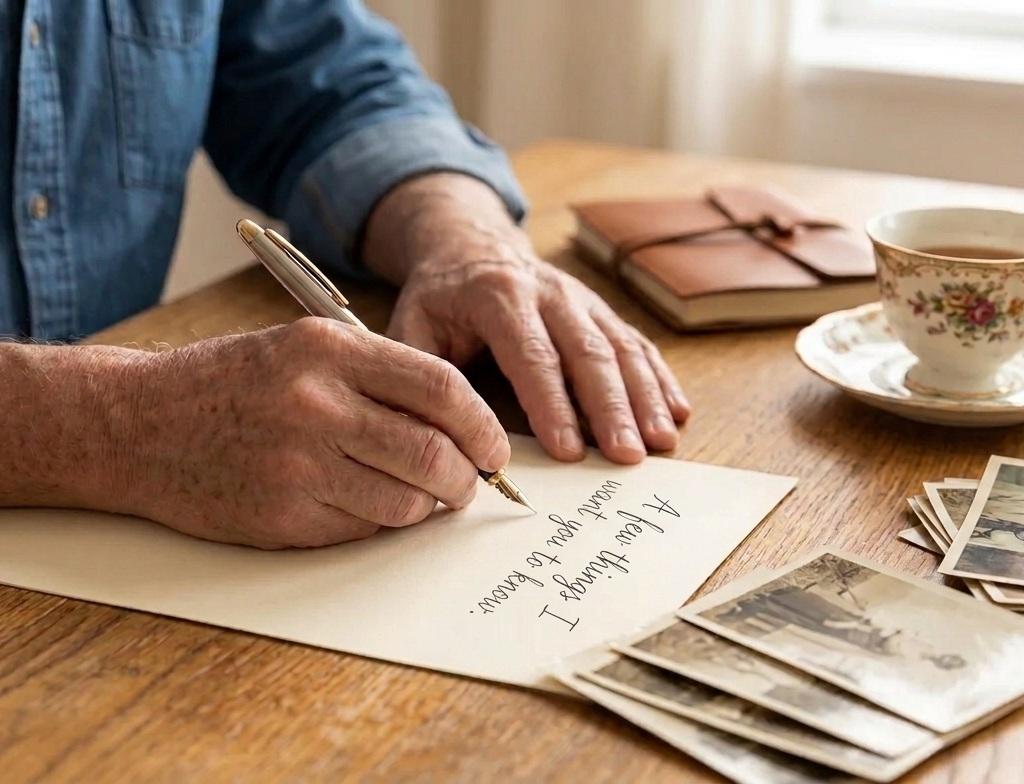
That's the idea behind an ethical will, sometimes called a legacy letter. It isn't a legal document and it doesn't move any assets. It's a written note to the people you love that shares the things a will has no room for: your values, the lessons you picked up along the way, your hopes for them, and the kind of gratitude that's easy to feel and hard to say out loud.
It can hold whatever you want it to. Maybe it's the story behind a decision that shaped your family, or something you learned the hard way and would rather they didn't have to. It might be what you hope they hold onto, or the things you'd like them to feel free to set down. There's no format to follow, and no particular length you're aiming for.
If the idea feels daunting, it helps to know that a legacy letter doesn't need to be long or polished. Nobody is grading it. A single honest page in your own voice does far more for the people who read it than a carefully worded version that never gets written. Plenty of these run a paragraph. Some are a list. The only real requirement is that it sounds like you.
There's a practical reason not to put it off, too. A letter like this is easiest to write while you're well and have room to reflect, not something to save for a season that may not offer much of either. You don't need more than a quiet afternoon to begin.
What tends to surprise people is how much this matters to the ones who receive it. Ask families who have inherited both a legacy letter and an estate, and the money is rarely what they mention first. It's the letter. The words and the stories get read again, kept, and passed along, long after the practical details have been settled.
That's a big part of what a legacy really comes down to. Years from now, what your family holds onto usually isn't the size of the account. It's the sense of who you were and what you cared about, and a page in your own words is one of the clearest ways to give them that.
If writing one appeals to you, we're glad to talk through how it fits alongside the rest of your planning. Just hold the two ideas separately: a legacy letter speaks to your family, but it carries no legal weight. The will, the beneficiary designations, and the directives that actually govern your estate still belong with your estate attorney. The letter complements those documents rather than standing in for any of them.